
An alpine infrastructure project in Lombardy
Newly-designed mountain stations and an alpine hut by Peter Pichler Architecture are set to be built in Ponte di Legno, Italy, along the Valbione-Corno d’Aola-Angelo corridor at elevations reaching 2,200 meters (7,218 feet). Envisioned as part of a broader renewal of mountain mobility, the project brings together ski lift infrastructure, public interiors, and welcoming gathering spaces within a single project.
Set within the historic alpine terrain of the Valbione Mountain area, the intervention continues a long lineage of technical and touristic development that has shaped this landscape for decades. The design approaches this context with restraint, aligning new timber construction with existing routes, slopes, and tree lines, while maintaining a design-minded presence against the snow-covered terrain.
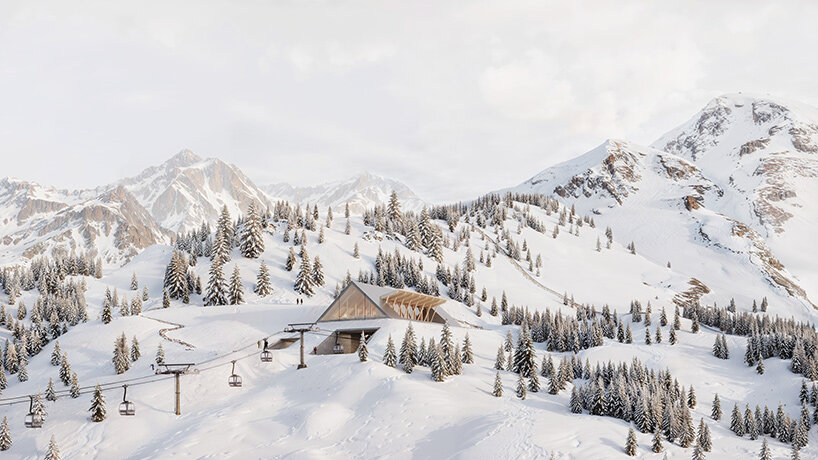
visualizations courtesy Peter Pichler Architecture
Peter Pichler Architecture frames a series of ascending views
Peter Pichler Architecture’s mountain station project replaces two separate ski lifts with one continuous gondola line, streamlining the ascent from the valley to the Angelo summit. This infrastructural decision establishes a legible vertical journey, marked by a sequence of stations that register scenic changes in altitude and view.
The architects plan each stop along the route to function as a spatial pause rather than a purely mechanical node. Platforms widen, roofs extend outward, and framed openings orient visitors toward distant ridgelines. Movement through the system becomes gradual and perceptible, shaped by both terrain and structure.
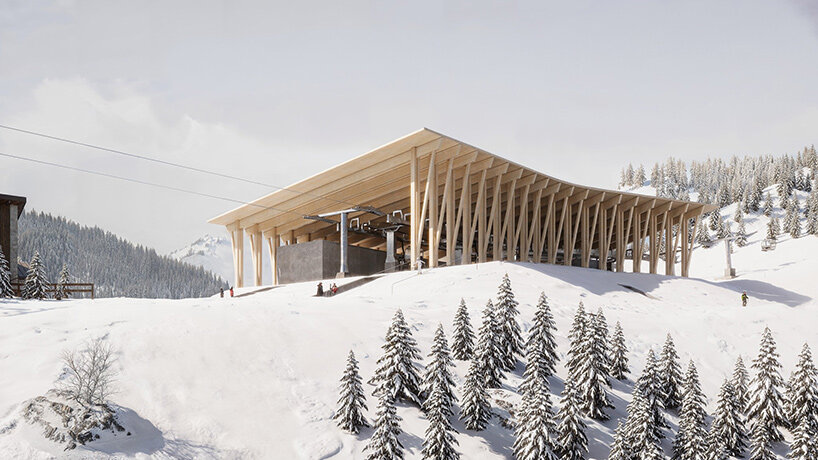
the project plans new mountain stations and a hut along a gondola route in Ponte di Legno
Timber structures shape alpine design
Across all mountain stations, Peter Pichler Architecture employs timber as the main structural and interior material. Slender wooden columns rise at slight angles, supporting deep pitched roofs that echo familiar alpine profiles while remaining rigorously contemporary. The construction emphasizes precision and repetition, allowing the buildings to read as light frameworks set into the snow.
Roof geometry plays a central role in defining both exterior silhouette and interior atmosphere. Broad overhangs temper light and snowfall, while exposed structural rhythms guide circulation and sightlines. The architecture draws strength from consistency, even as each station adapts to its immediate surroundings.
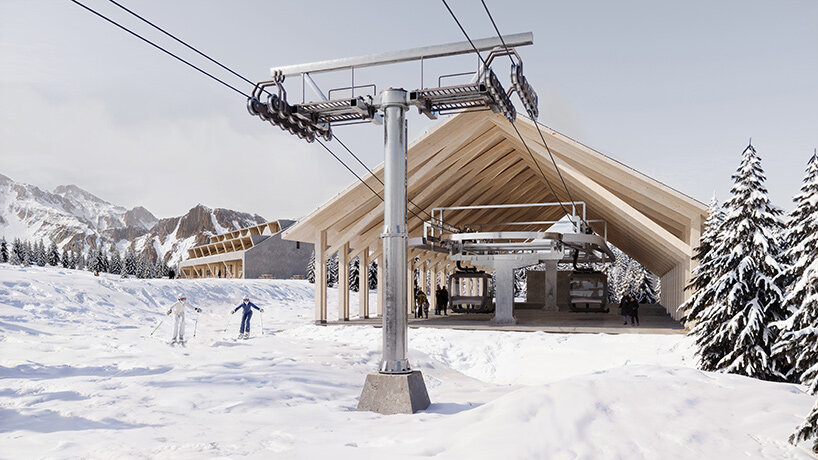
timber structures define a consistent design language across all stations
the alpine hut at the summit
At the highest point, the alpine hut operates as both destination and refuge. Positioned near the gondola arrival, the building offers sheltered seating, dining areas, and expansive views across the surrounding peaks. Large glazed surfaces open the interior to the landscape, while timber surfaces soften acoustics and light.
Inside, the spatial sequence favors openness and continuity. Long tables, benches, and circulation paths align with the roof structure, reinforcing a sense of collective use without imposing hierarchy. The atmosphere remains calm and tactile, shaped by wood grain, filtered daylight, and the steady presence of the mountains beyond.
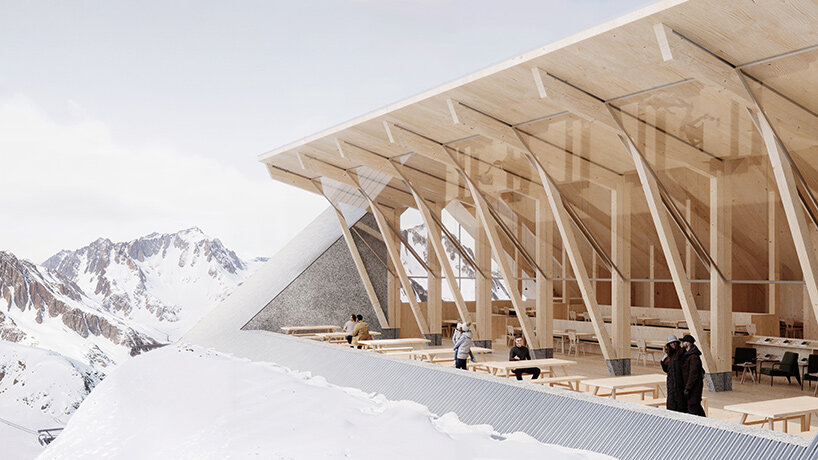
slender wooden columns and pitched roofs respond to alpine construction traditions
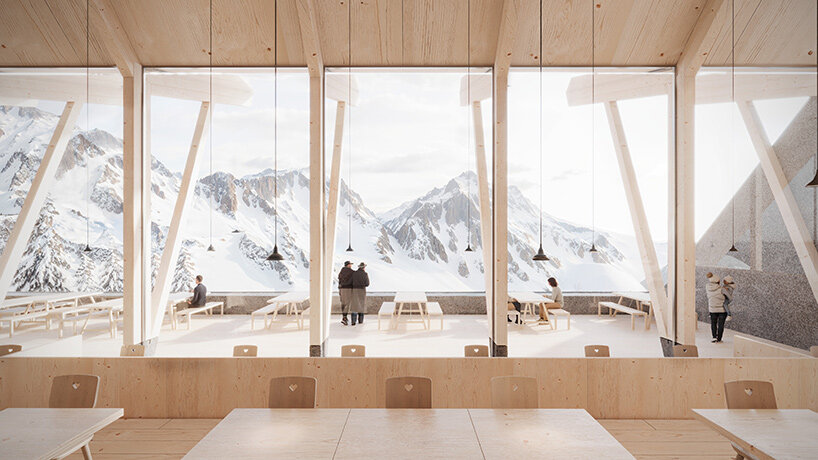
at the summit, the Alpine Hut will bring a warm gathering place with mountain views
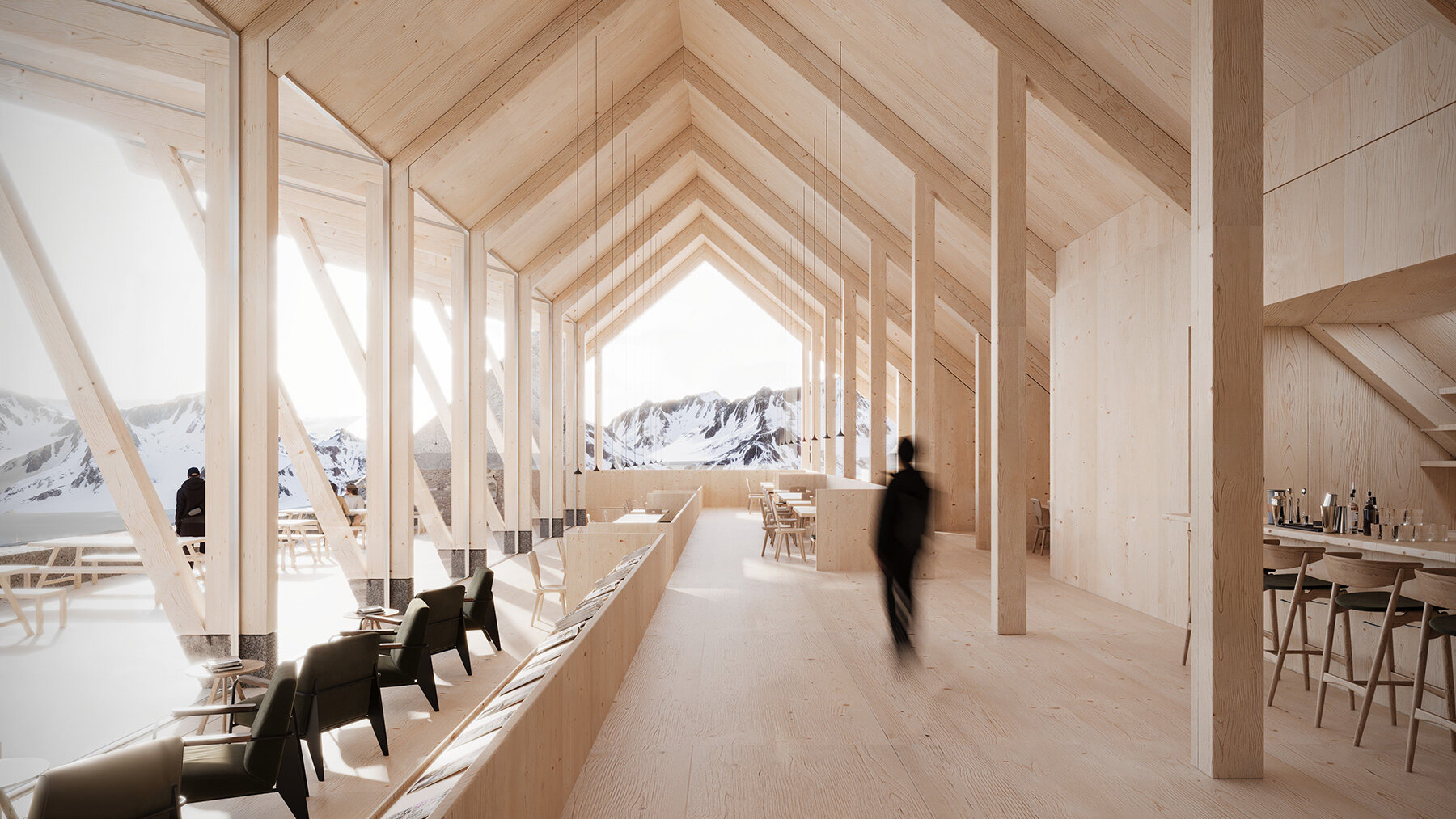
interior spaces emphasize openness and Alpine design tradition
project info:
name: Valbione Mountain Stations and Hut
architect: Peter Pichler Architecture | @peterpichler_architecture
location: Ponte di Legno, Italy
design team: Peter Pichler, Daniele Colombati, Amir Sajadifar, Ludovico Capestro, Filippo Ogliani
status: ongoing
The post peter pichler echoes traditional alpine design with timber ski lift stations in italy appeared first on designboom | architecture & design magazine.
