
BIG adds final touches to Suzhou Museum of Contemporary Art
The Suzhou Museum of Contemporary Art by Bjarke Ingels Group (BIG) emerges on the banks of Jinji Lake. Designed in collaboration with ARTS Group and Front Inc., and commissioned by Suzhou Harmony Development Group, the 60,000-square-meter complex (find designboom’s previous coverage here) is envisioned as a contemporary reinterpretation of Suzhou’s historic gardens.
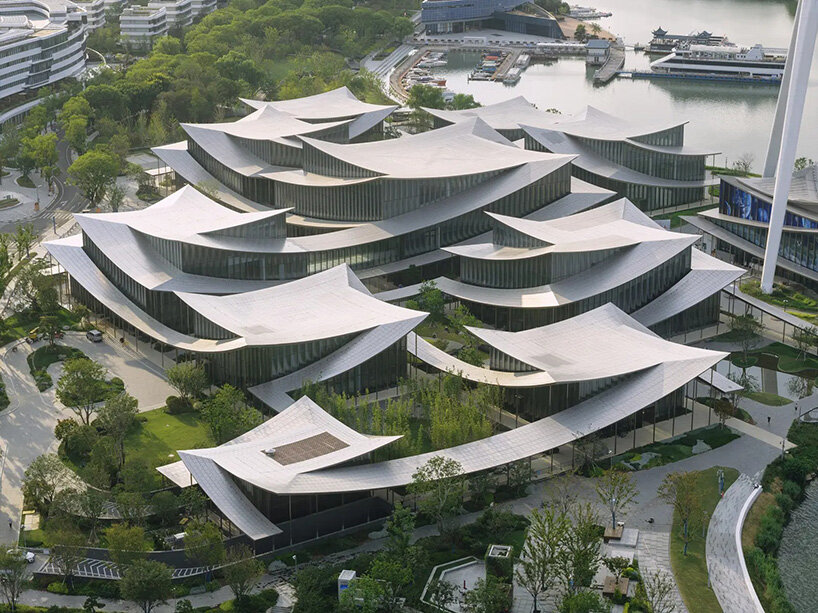
The structure unfolds as a village of twelve interconnected pavilions unified beneath a flowing, ribbon-like roof whose gentle undulations echo tiled eaves. Materialism, a material-led inaugural exhibition curated by the studio, is on view through March 8th, 2026, before the museum temporarily closes and reopens this summer for its grand inauguration.
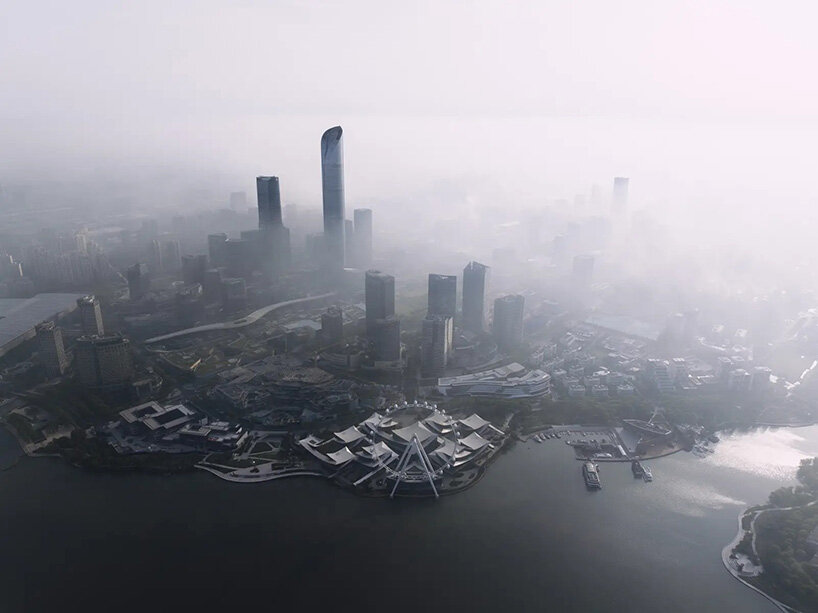
all images by Ye Jianyuan, unless stated otherwise
fluid network of pavilions evokes garden heritage
Rooted in the cultural identity of Suzhou, BIG’s design draws from the traditional lang (廊), a long, covered corridor that guides visitors through Chinese gardens, transforming it into a fluid network of exhibition spaces, courtyards, and walkways. ‘Suzhou is the cradle of the Chinese garden,’ notes Bjarke Ingels, describing the museum as ‘a garden of pavilions and courtyards’ where architecture and landscape intertwine. Glazed galleries and porticoes link the structures together in what Ingels calls ‘a Chinese knot of interconnected sculpture courtyards and exhibition spaces.’ Seen from above, the stainless steel roofs ripple across the site like a living organism, their gentle curves tracing a silhouette that connects the city to the lake.
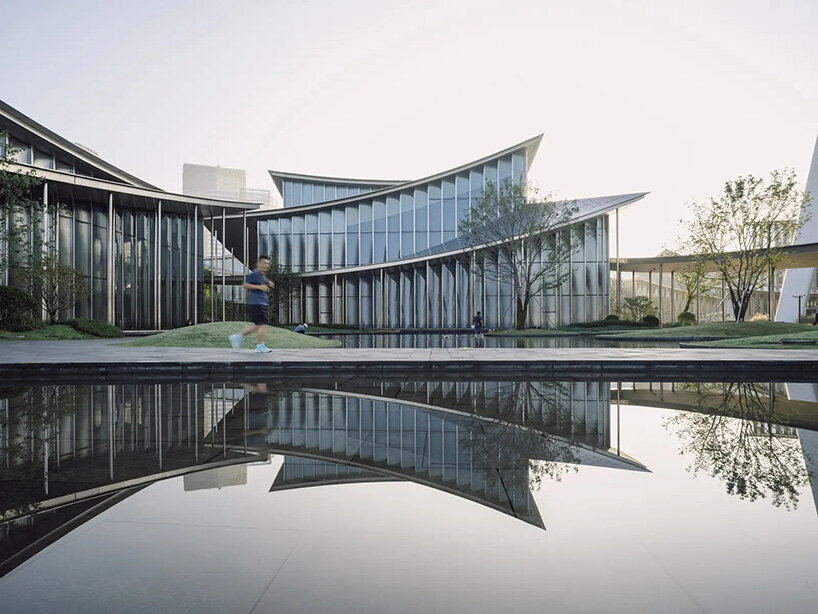
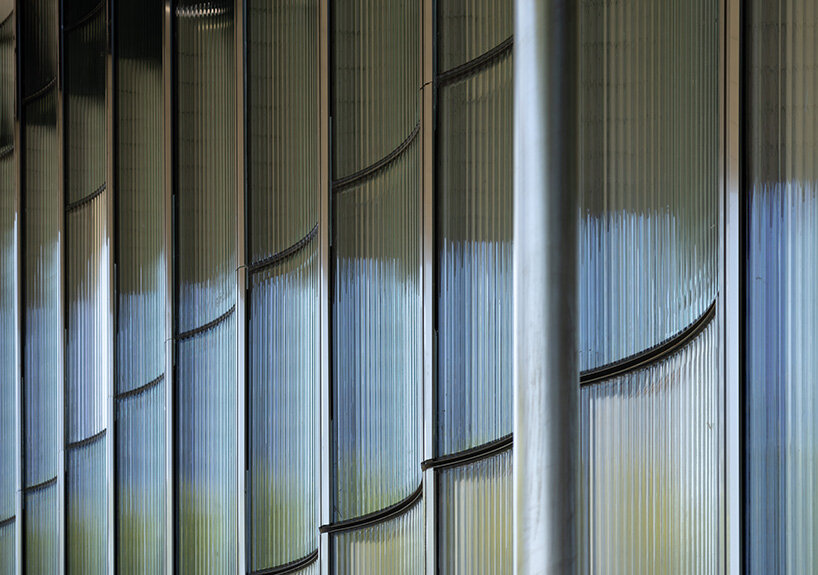
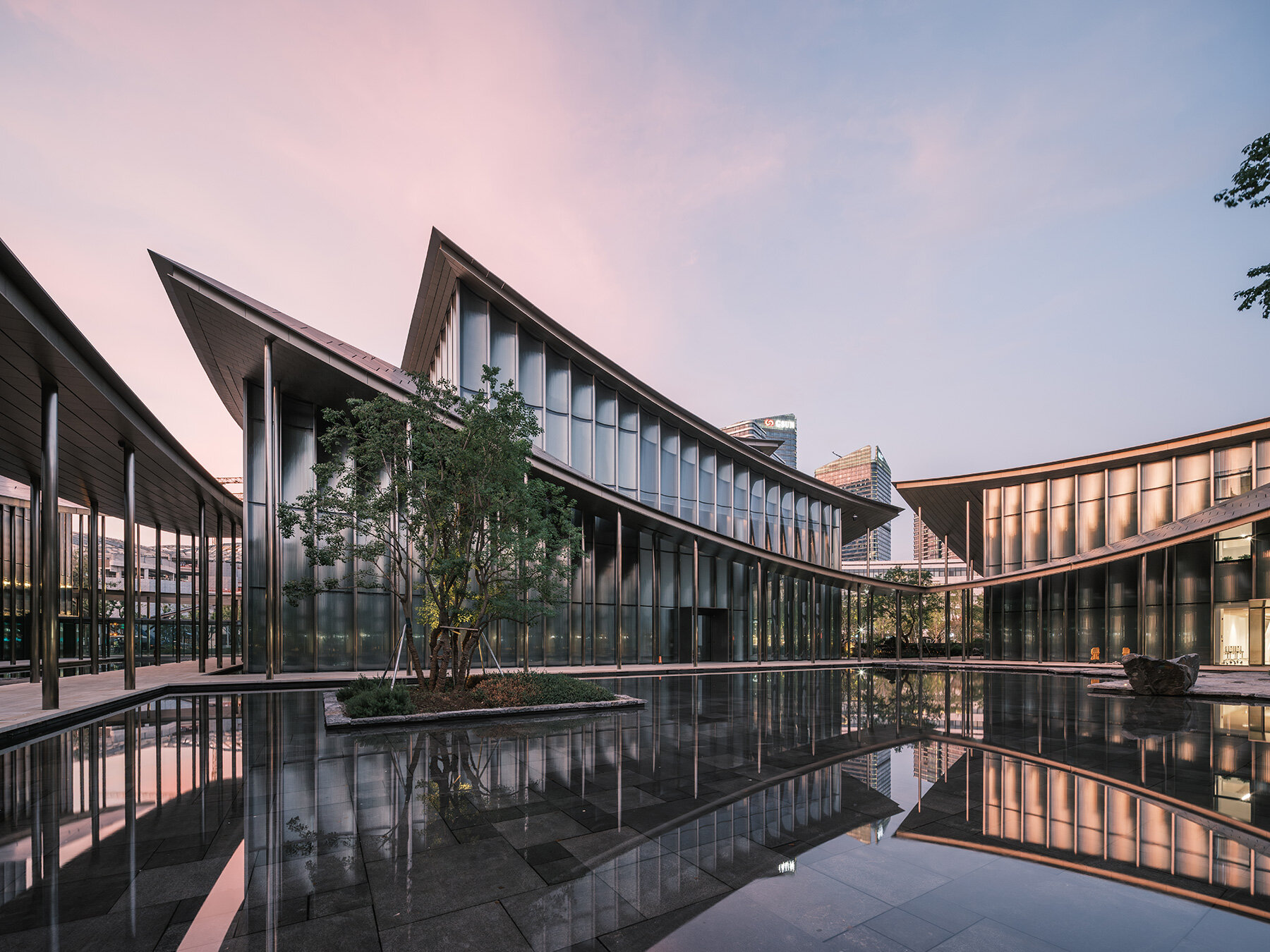
The architects mirror the changing colors of the sky and waters on warm-toned stainless steel and curved glass facades. Inside the museum, daylight filters through clerestories and skylights, creating reflections and shadows across the galleries. Four of the twelve pavilions contain the main exhibition halls, while the remaining spaces host a multifunction hall, theater, restaurant, and grand entrance area. Bridges and tunnels weave between the buildings above and below ground, giving the museum flexible circulation and climatic adaptability. Outside, a sequence of gardens extends the visitor journey toward the lake, where sculpture installations and public paths remain open beyond museum hours.
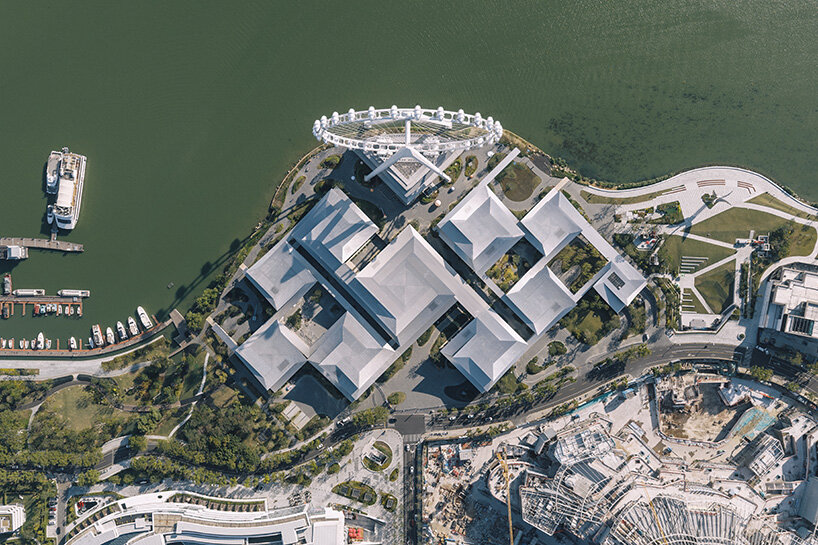
a sequence of gardens extends the visitor journey toward the lake
materialism: a prelude to the museum’s opening
For BIG partner Catherine Huang, the project is a tribute to Suzhou’s enduring relationship between architecture and landscape. ‘We envision the lang, a traditional element of Suzhou gardens, gracefully winding through the landscapes and transforming into pavilions,’ she explains. The museum follows China’s GBEL Green Star 2 sustainability certification, addressing technical and social dimensions of environmental design. In 2024, Suzhou MoCA was recognized as a national landmark when it appeared on an official China Post stamp celebrating the city’s urban development around Jinji Lake.
Materialism reframes architecture through the substances that give it form. Rather than organizing projects by typology or geography, the exhibition groups twenty of BIG’s works according to the materials they are made from, including stone, earth, concrete, metal, glass, wood, fabric, plastic, plants, and recyclate. Seating elements throughout the galleries are fabricated from the very materials on display, turning the exhibition into a tactile, sensory journey through texture, weight, and surface. Visitors encounter architecture not as an image or model alone, but as something to be physically experienced through matter. ‘Due to the nature of the architectural profession, the fate of the project is always decided in the early stages: the concept design or the competition,’ explains Bjarke Ingels. ‘But 90% of our work is what follows, the translation of the idea into reality, the materialization of the fiction into fact. This exhibition is dedicated to the material aspect of our profession.’ Ingels continues: ‘The ideas and concepts are still there, but here the architectural story is told through the materials and the collaborations that made them possible.’
the Suzhou Museum of Contemporary Art by BIG emerges on the banks of Jinji Lake
the structure unfolds as a village of twelve interconnected pavilions
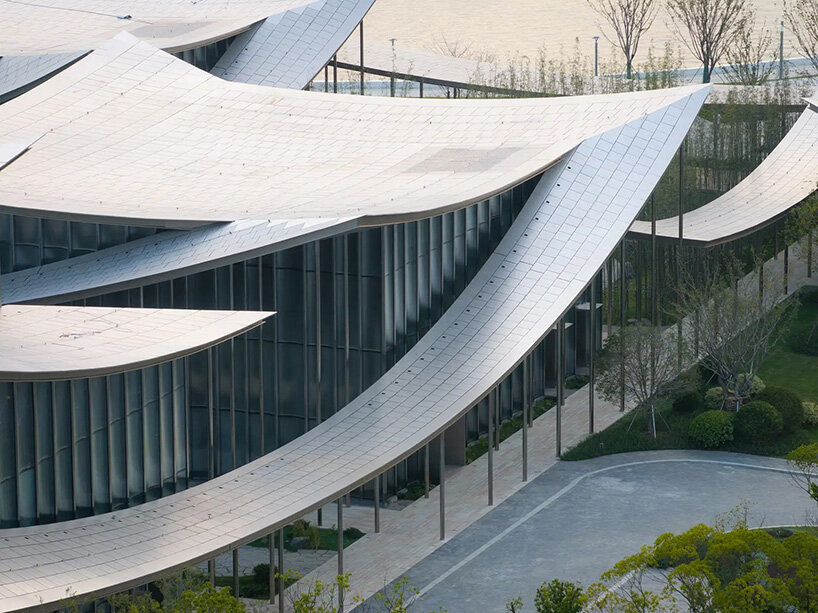
a flowing roof whose gentle undulations echo tiled eaves tops the museum | image by Studio SZ Photo
a tribute to Suzhou’s enduring relationship between architecture and landscape | image by Studio SZ Photo
in 2024, Suzhou MoCA was recognized as a national landmark
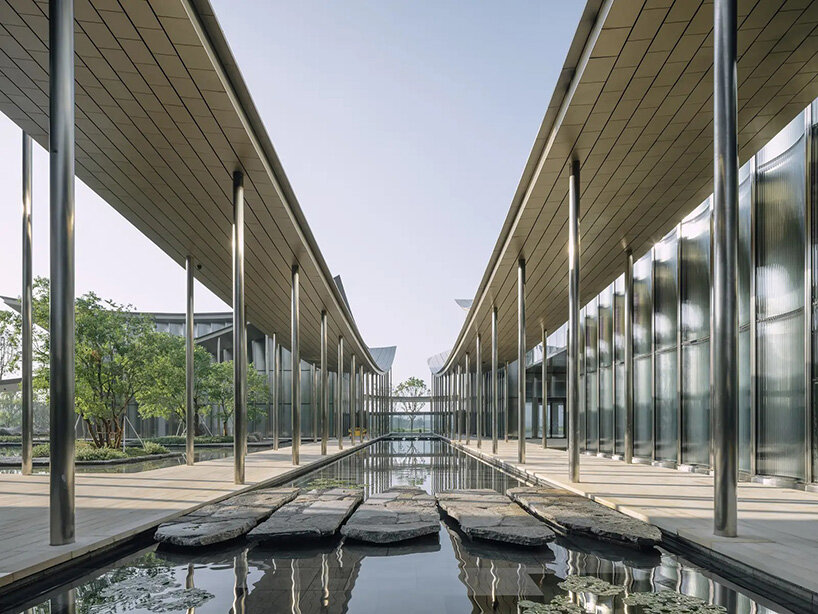
BIG’s design draws from the traditional lang (廊)
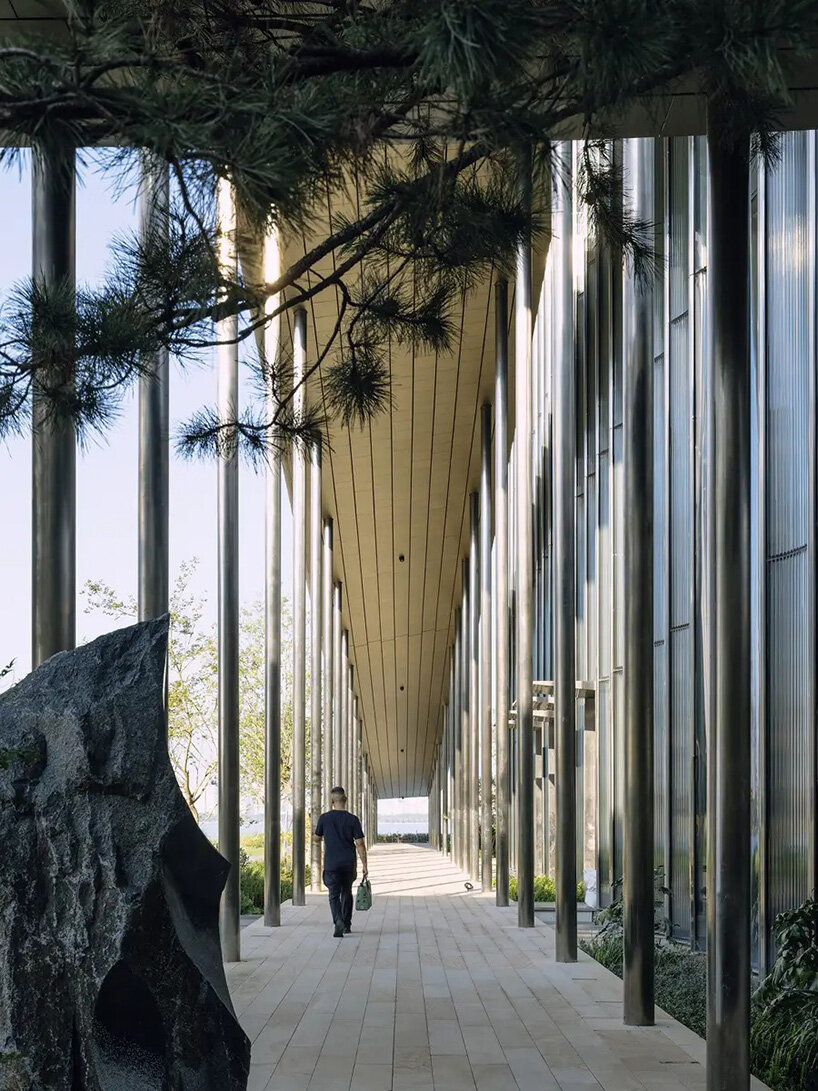
a fluid network of exhibition spaces, courtyards, and walkways
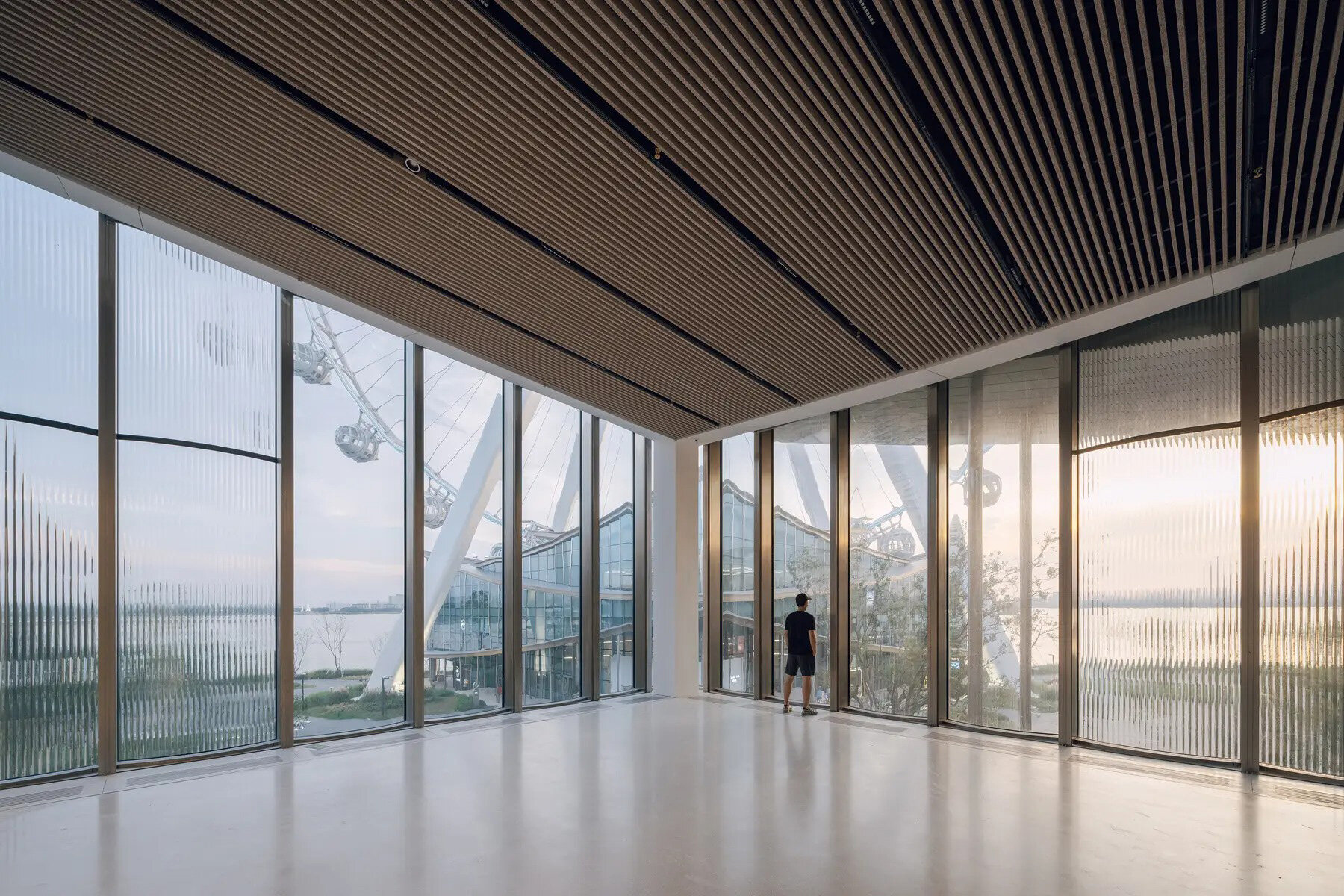
glazed galleries and porticoes link the structures together
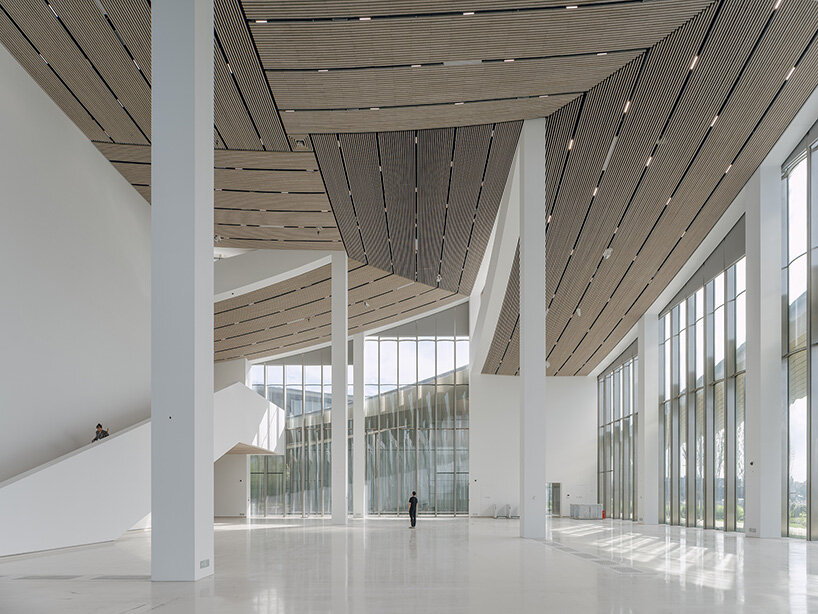
a landscape of light, reflection, and interwoven paths
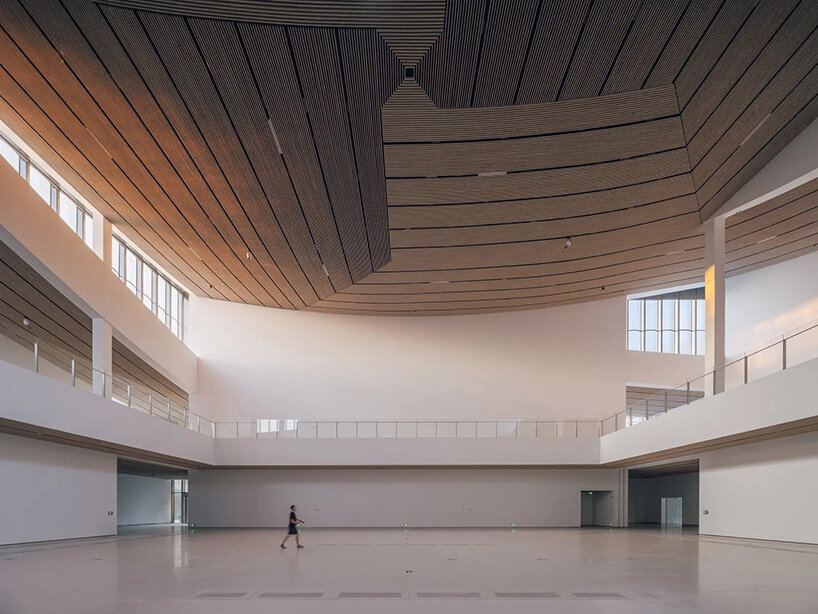
four of the twelve pavilions contain the main exhibition halls
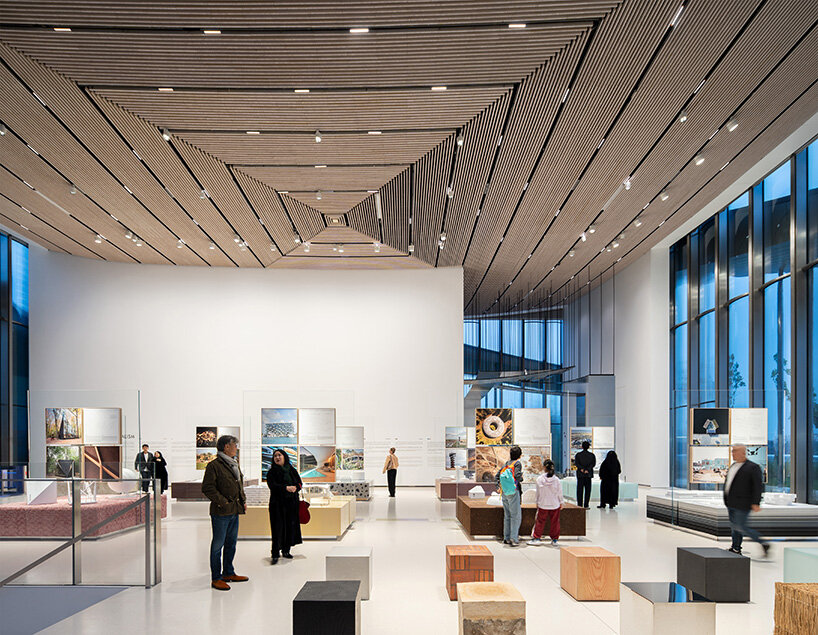
Materialism invites visitors on a ‘material odyssey’ | image by Studio SZ Photo
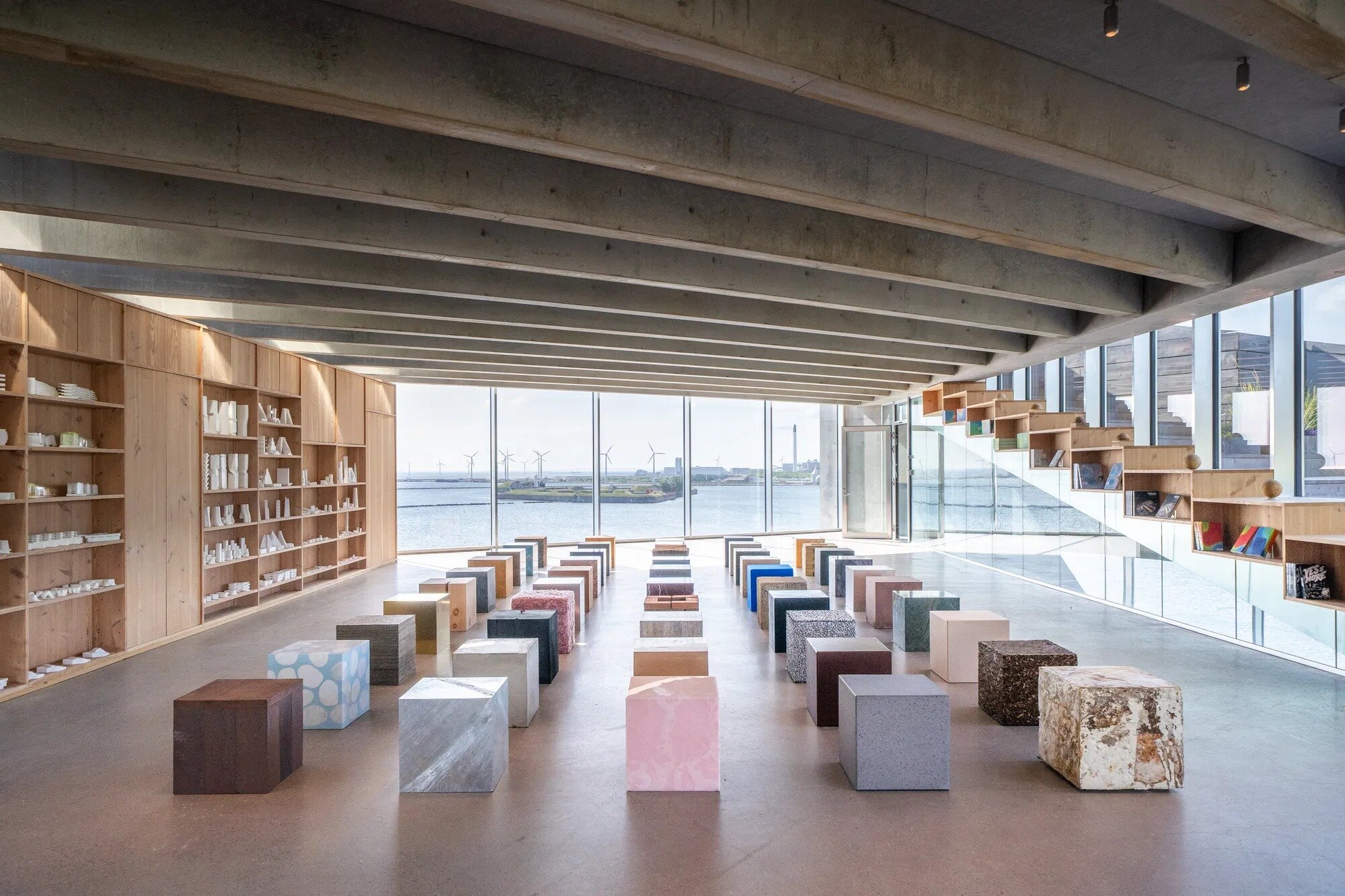
cubic stools made from stone, glass, terrazzo, metal, and recycled matter | image by Studio SZ Photo & Suzhou MoCA
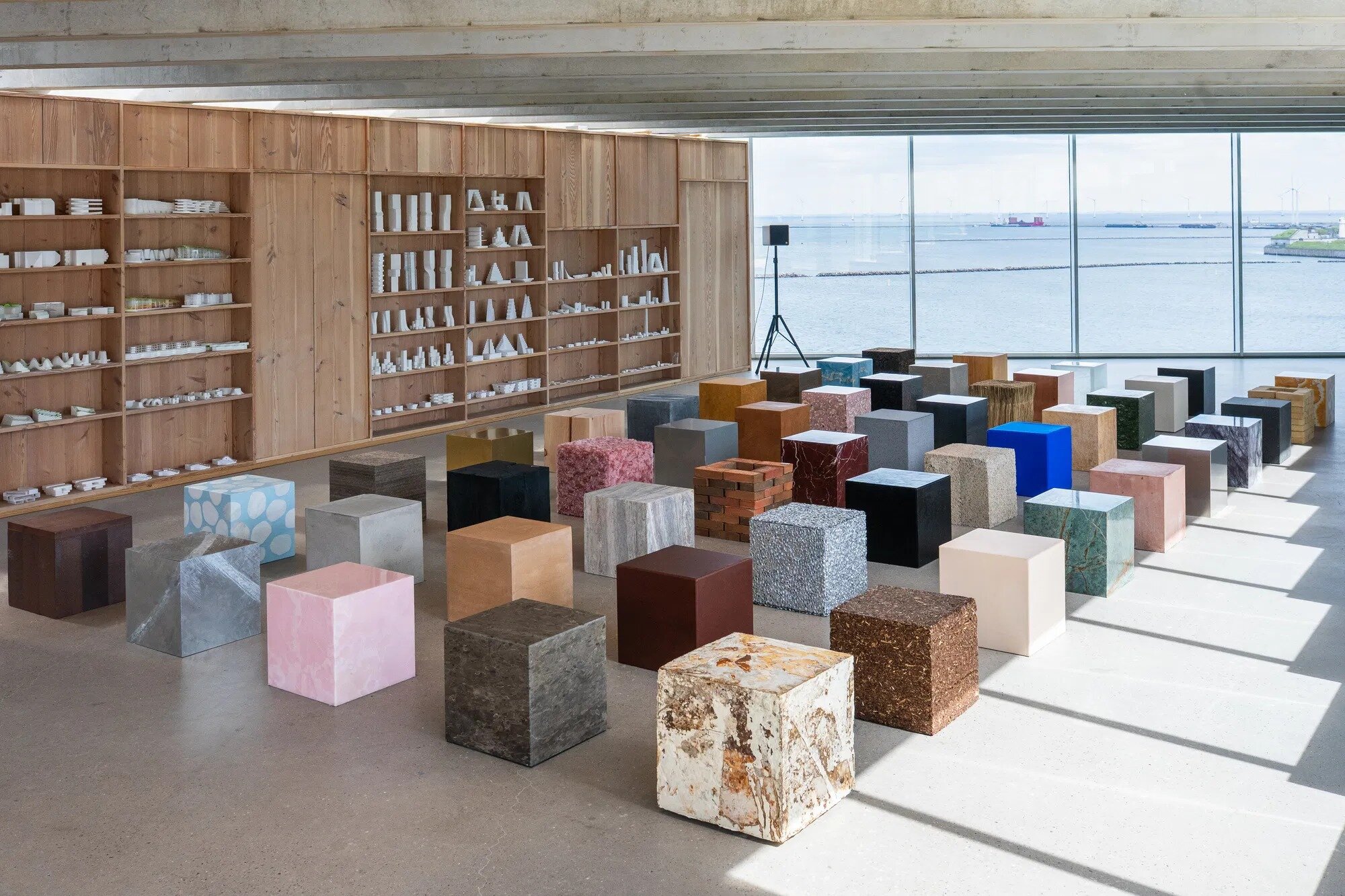
material samples | image by Studio SZ Photo & Suzhou MoCA
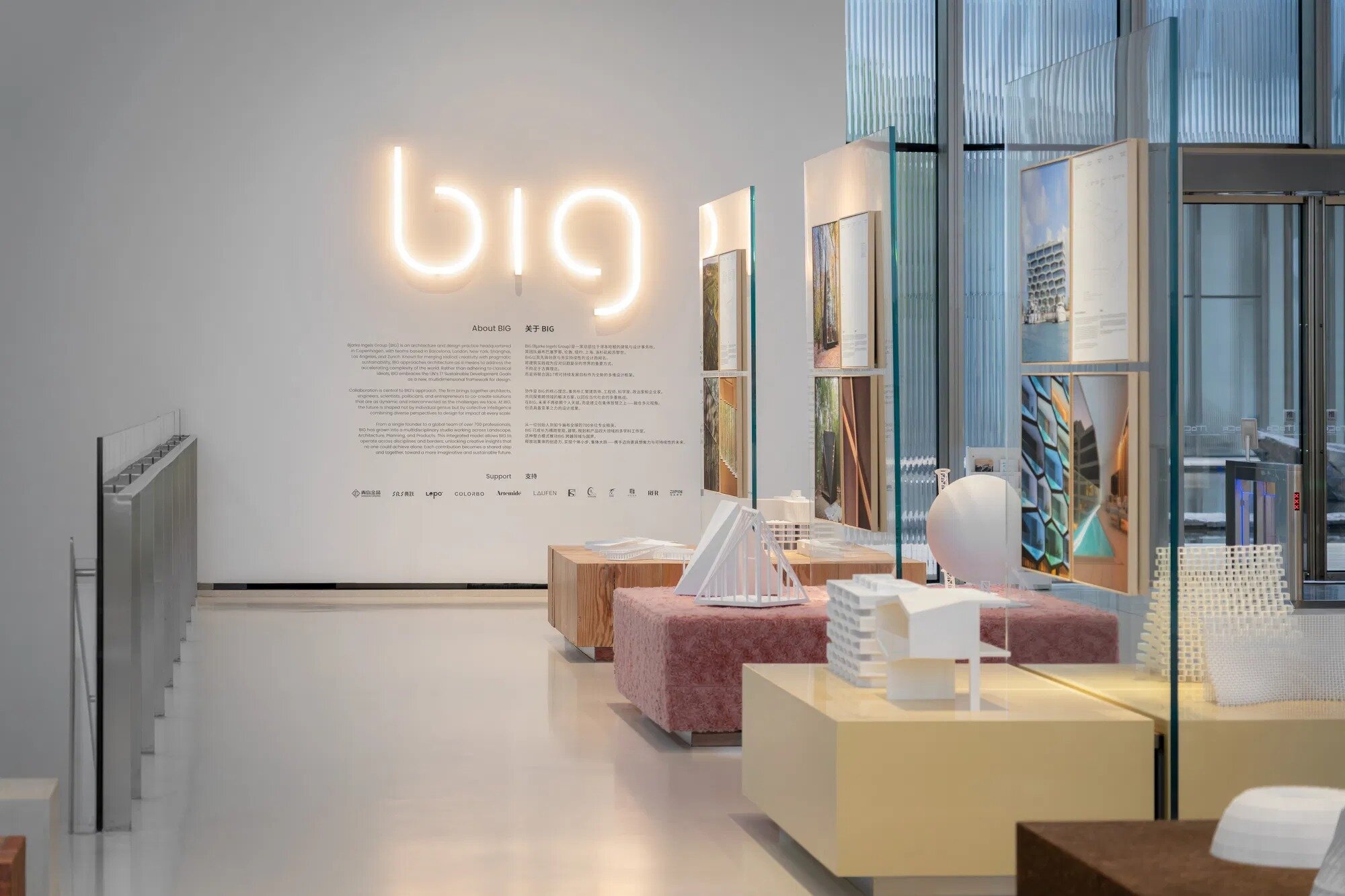
luminous ‘BIG’ sign anchors the entrance to the exhibition | image by Studio SZ Photo & Suzhou MoCA
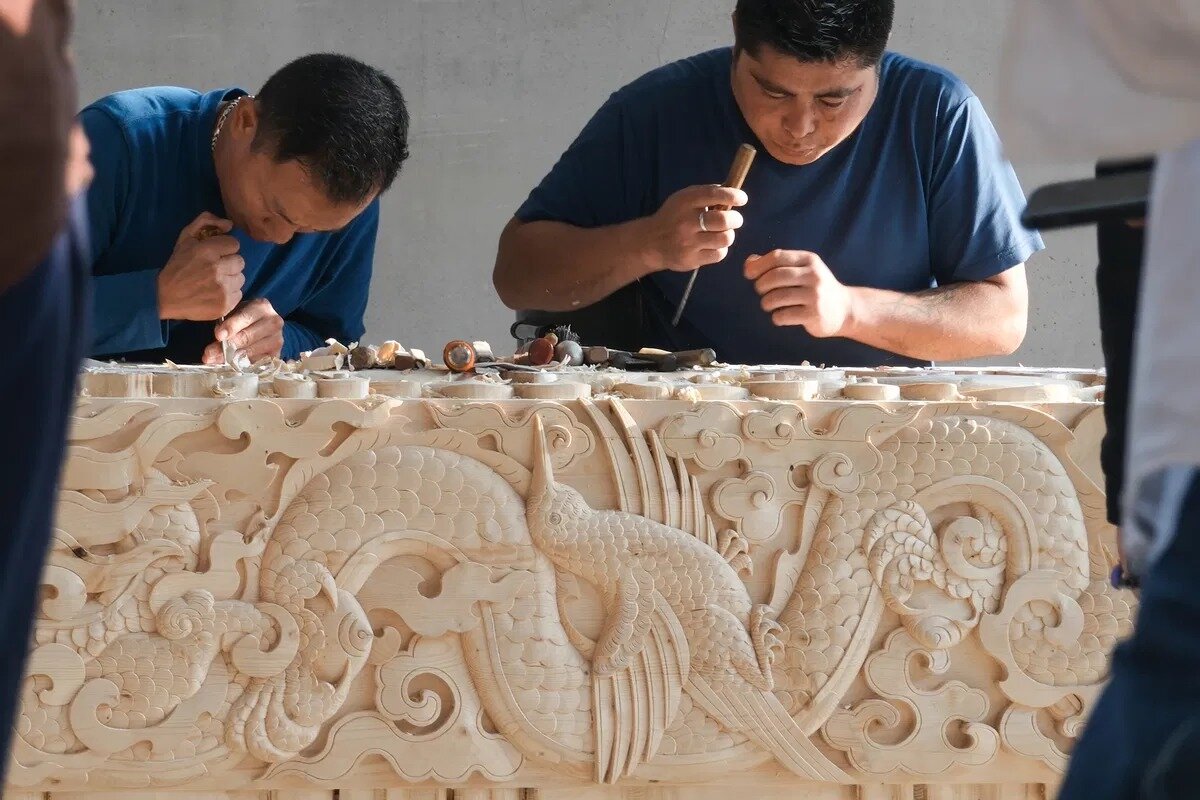
a 1:1 prototype of the Gelephu International Airport’s diagrid structure | image by Studio SZ Photo & Suzhou MoCA
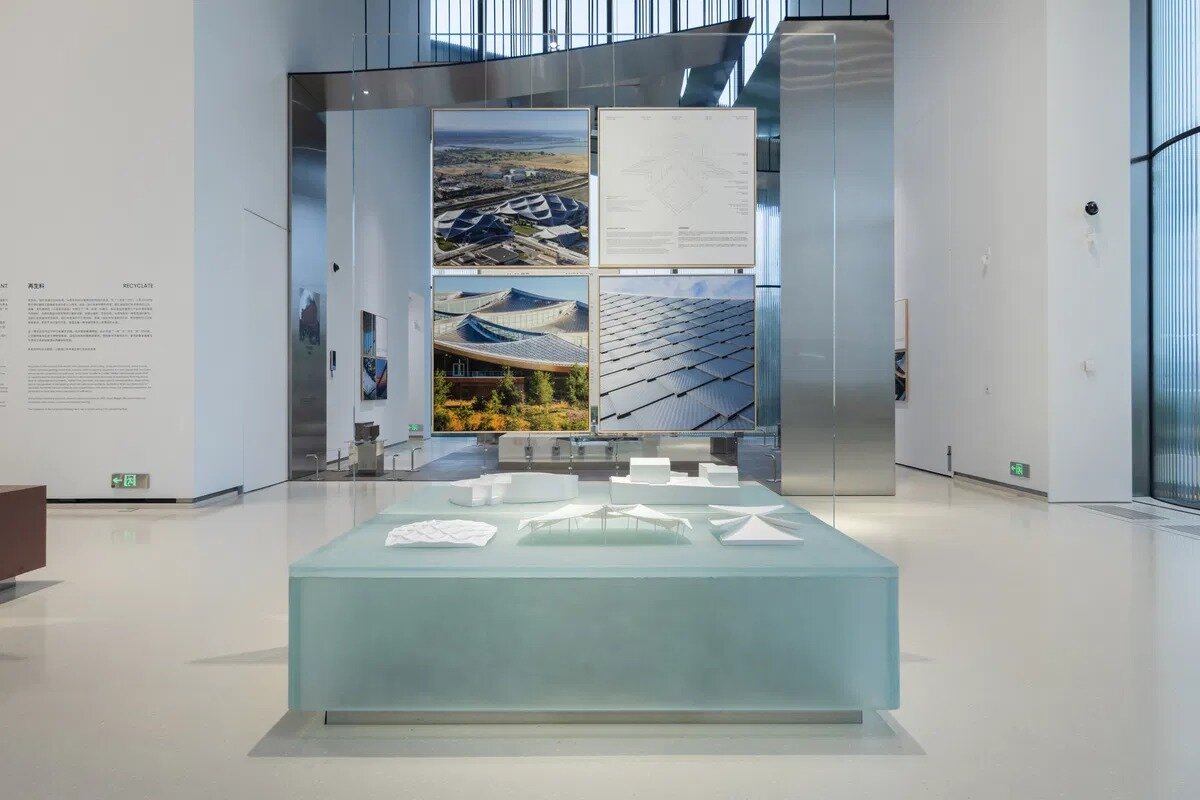
project models and photographs | image by Studio SZ Photo & Suzhou MoCA
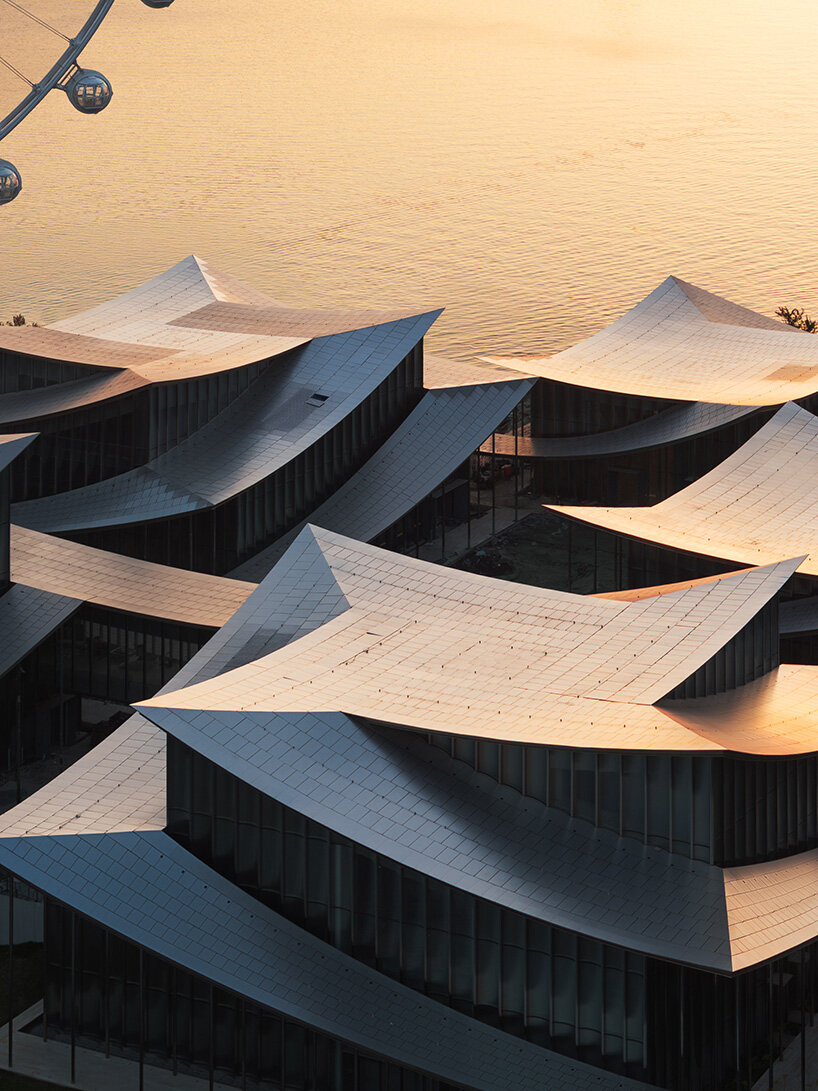
architecture and landscape intertwine
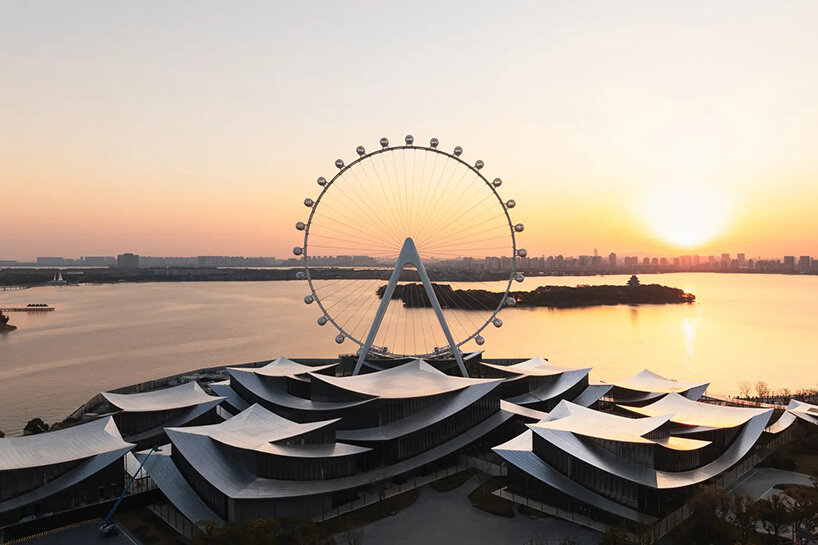
a contemporary reinterpretation of Suzhou’s historic gardens
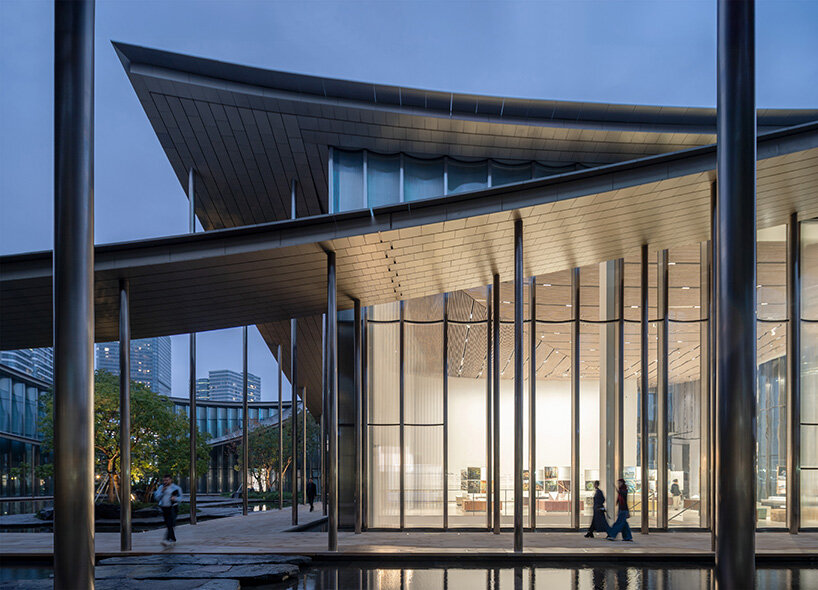
the museum follows China’s GBEL Green Star 2 sustainability certification | image by Studio SZ Photo
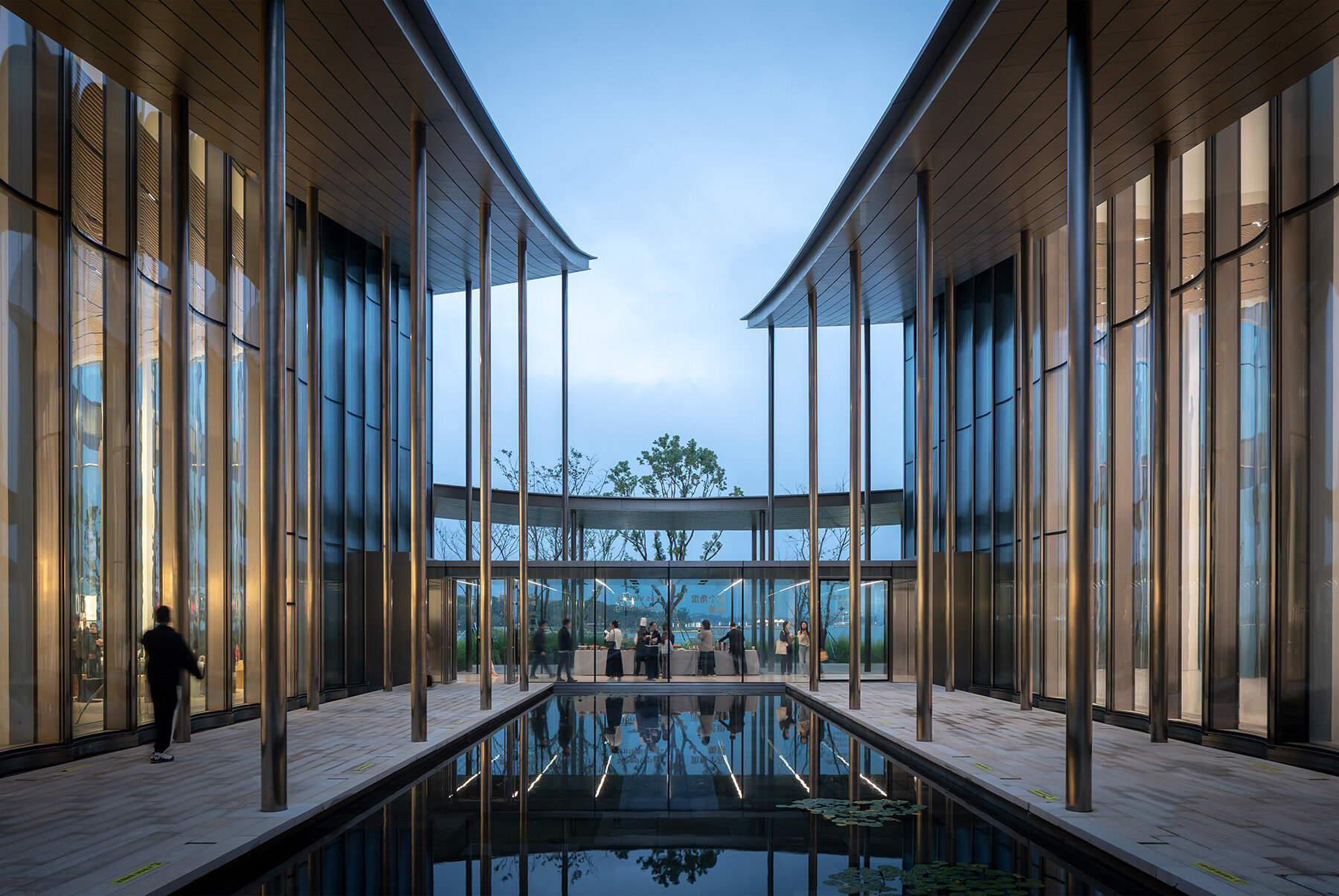
sculpture installations and public paths remain open beyond museum hours | image by Studio SZ Photo
project info:
name: Suzhou Museum of Contemporary Art
architect: Bjarke Ingels Group (BIG) | @big_builds
location: Suzhou, China
area: 60,000 sqm (646,000 sqft)
client: Suzhou Harmony Development Group Co. Ltd
collaborators: ARTS Group Co. Ltd, Front Inc., Shanghai Shuishi Landscape Design Co. Ltd, Rdesign International Lighting
photographers: Ye Jianyuan, Studio SZ Photo | @studiosz_photo
The post BIG’s suzhou museum of contemporary art opens with ‘materialism’ exhibition appeared first on designboom | architecture & design magazine.
